
Cloudflare Crash 2025: Most people don’t think about what keeps the internet running. You open a website, it loads. You use an app, it works. That illusion of stability shattered in 2025 when a huge part of the online world suddenly broke. Banking systems slowed to a crawl. Payment gateways failed. News sites refused to load. Even popular streaming apps were freezing.
It felt like the internet itself had cracked.The cause was not a hacker or a massive cyberattack. It was something far more unsettling: a tiny hidden glitch inside Cloudflare’s system that had been sleeping quietly for months. A small bug that had been patiently waiting for the wrong moment. And once a routine update touched it, the entire structure collapsed like a house of cards.
Cloudflare is one of the few companies that silently carries the internet on its shoulders. It handles security, routing, traffic optimisation, DDoS protection, and the flow of billions of requests across the world. When Cloudflare stops for a moment, the internet stops breathing. That is exactly what happened during the infamous Cloudflare Crash 2025.
This is not just a story about a bug. It is a reminder of how fragile the modern internet is, and how one tiny mistake can ripple across the planet in minutes.
How the Cloudflare Crash 2025 Unfolded
The outage didn’t begin with explosions. It began quietly, with a simple configuration change. Engineers were rolling out a seemingly harmless update meant to improve internal routing logic. Nothing major. Nothing risky. This update ran daily.
But this time, the update touched a hidden piece of code buried deep in Cloudflare’s traffic management system. This was the latent bug that had been lying dormant since late 2024.
The moment the update executed, the system entered an unexpected loop. CPU usage spiked. Routing tables became corrupted. Nodes began failing one by one. Network traffic that should have been distributed smoothly suddenly piled up in one direction. Within seconds, data centers around the world were hit by the same chain reaction.
It took only twelve minutes for the bug to knock out:
- major e-commerce websites
- payment processors
- government portals
- social media services
- enterprise dashboards
- logistics and airline systems
People thought the internet had been hacked. Some even thought it was a global attack. But the truth was far simpler and more complicated at the same time.
It was a software mistake. A mistake that hid so quietly that not even Cloudflare’s world class debugging teams noticed it until it detonated.
For those who want technical background, the incident resembles past system failures documented on the Cloudflare Blog Cloudflare Blog where subtle bugs triggered massive outages.

Cloudflare Crash 2025: Why the Latent Bug Was So Dangerous
A latent bug is a flaw that does nothing until a specific condition appears. It hides. It waits. It sits inside the code like a landmine. You can test the system a thousand times and never trigger it.
Cloudflare’s teams test thousands of scenarios every week. But this bug required a very exact combination of timing plus a specific internal variable state that rarely appeared. When the update ran, it created the perfect conditions to wake the bug.
The result was a cascading failure. This means one small failure triggered another, which triggered another, until the whole system fell apart.
This kind of failure is terrifying because it’s silent. There is no warning. No smoke. No rising temperature. The system looks normal right until the moment it collapses.
Experts often compare this to a bridge that suddenly snaps. Everything looks stable. And then the whole thing drops in seconds.
Cloudflare Crash 2025: Which Parts of the Internet Broke During the Crash
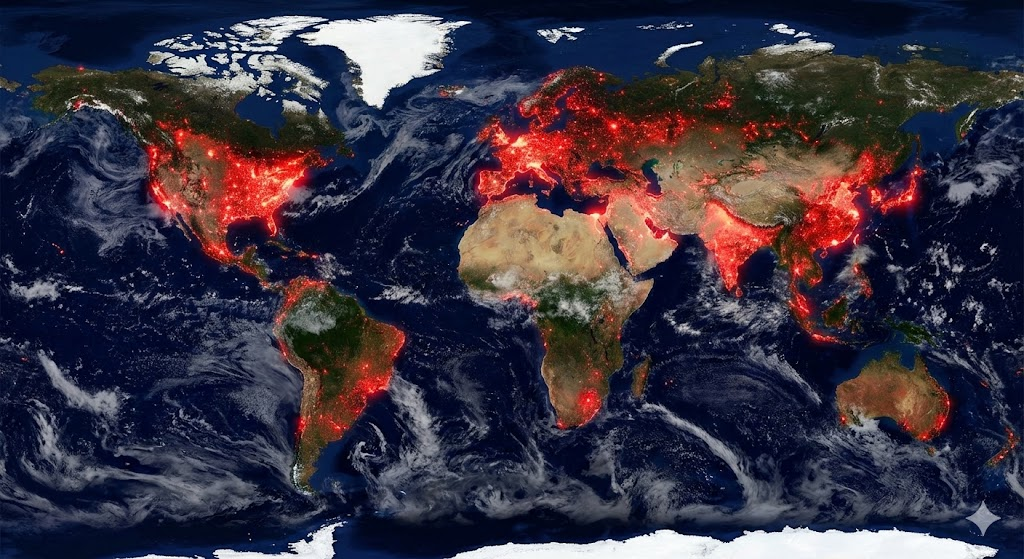
The Cloudflare Crash 2025 had a massive blast radius. The outages were not random. They followed the flow of Cloudflare’s global edge network. Regions with the highest traffic were hit hardest.
During the outage, people reported:
- login failures on major apps
- slow or broken payment systems
- frozen dashboards for businesses
- downed APIs used by thousands of apps
- banking apps stuck on loading
- airline check-in errors
- shopping cart breakdowns on e-commerce sites
- media platforms refusing to load
Even big companies that had backups felt the slowdown because so much traffic relies on Cloudflare’s edge caching.
This was one of those rare moments where the world realised how centralised the internet has become. A few companies carry the world’s digital weight. When they fall, everything shakes.
For those who want to understand how new AI systems could prevent such events in the future, our internal article explains this well:
Smarter Than ChatGPT: 5 New AI Models Changing Everything in 2025
Cloudflare Crash 2025: How Cloudflare Responded
Cloudflare teams went into emergency mode. Thousands of logs were analyzed. Routing systems were reset. Data centers were isolated from one another. Engineers manually drained traffic from failing nodes to stable ones.
The hardest part was identifying the root cause. When everything goes wrong at the same time, it becomes difficult to see what failed first. But eventually, they traced it back to the update that triggered the dormant error.
Cloudflare published a detailed post about the issue, admitting the flaw and outlining steps to prevent similar incidents. Their response was fast, transparent, and technically deep. This is why Cloudflare still maintains strong trust despite occasional failures.
The company also worked with independent researchers and cyber response experts. Similar incidents have been studied by cybersecurity teams covered in research on MIT Technology Review MIT Technology Review.
What the Crash Reveals About the Internet’s Future
The Cloudflare Crash 2025 is more than an outage. It is a lesson. The internet is not a solid structure. It is a network of delicate systems stacked on top of each other. If one pillar cracks, the entire architecture feels the shock.
This event revealed three important truths:
1. The internet is more fragile than we think
One bug can affect millions of people.
2. Centralisation has risks
When the world depends on a few companies, failures become global.
3. Testing cannot catch everything
Some failures only appear in real world conditions.
In the coming years, AI driven monitoring may help prevent such problems. Self healing systems that auto detect and auto patch vulnerabilities are becoming more common. But even then, the digital world will always be vulnerable to unexpected chaos.
Final Thoughts
The Cloudflare Crash 2025 wasn’t caused by a genius hacker. It wasn’t a government attack. It wasn’t sabotage. It was a reminder that even the strongest systems can fail because of the smallest mistakes.
The next time Netflix lags or your bank app refuses to load, remember this event. Our digital world runs on layers of trust, code, and constant maintenance. And sometimes, one tiny overlooked detail is enough to bring everything to a stop.
Cloudflare fixed the issue. The internet recovered. But the lesson remains: the web is powerful, but it is not invincible.
Comments