
The New Era of Smarter AI Begins
“Smarter Than ChatGPT” that phrase once sounded like marketing hype.
Not anymore.
In 2025, a wave of new AI models is rewriting what “intelligence” actually means. ChatGPT may have started the revolution, but it’s no longer alone. From Google’s Gemini Ultra to Anthropic’s Claude 3, these systems reason deeper, respond faster, and adapt more naturally than anything we’ve seen before.
The global AI race has moved beyond chatbots. These new models don’t just talk they think, analyze, and decide. Some can debug code on their own; others can interpret images, video, or even human emotion.The story of being Smarter Than ChatGPT isn’t about competition; it’s about evolution how machines are learning to think like humans, and perhaps even improve on human reasoning itself.
1. Gemini Ultra 2 — Google’s Reasoning Powerhouse
Google DeepMind has quietly been shaping what many call the “thinking model.” The new Gemini Ultra 2 is the first major system in 2025 that challenges GPT-style models not through scale but through reasoning.
Gemini Ultra doesn’t just generate words; it understands why they matter. It merges video, text, audio, and even real-world context into a single learning system. That means it can analyze a courtroom argument, summarize a podcast, or interpret a data visualization — all in one thread.
What makes it feel smarter than ChatGPT is its self-correction logic. When it’s wrong, it knows it — and fixes itself. Google calls it “recursive reflection,” a fancy term for AI that learns from its own mistakes in real time.
DeepMind researchers revealed that Gemini Ultra 2 outperformed GPT-4 Turbo in over 80% of reasoning tests. That’s not just incremental — that’s a leap.
(Reference: Google DeepMind)
2. Claude 3 — The Ethical Genius of Anthropic
If Gemini represents pure intelligence, then Claude 3 represents wisdom. Built by Anthropic, Claude 3 is one of the first AIs designed to balance empathy, logic, and moral reasoning — a big part of what makes it feel smarter than ChatGPT.
Claude doesn’t just answer; it understands intent. It reads the tone, identifies emotional triggers, and adapts accordingly. That makes it ideal for lawyers, teachers, and therapists — professionals who rely on understanding people, not just words.
Anthropic calls this design “Constitutional AI” — meaning Claude follows a built-in ethical rulebook. It avoids manipulation, emotional bias, and harmful content — something ChatGPT still struggles with.
In everyday testing, Claude 3 retained context for conversations nearly 10x longer than GPT-4. It remembers subtle nuances like a real human does.
(Reference: Anthropic AI)
3. Mistral 7B — The Open-Source Underdog
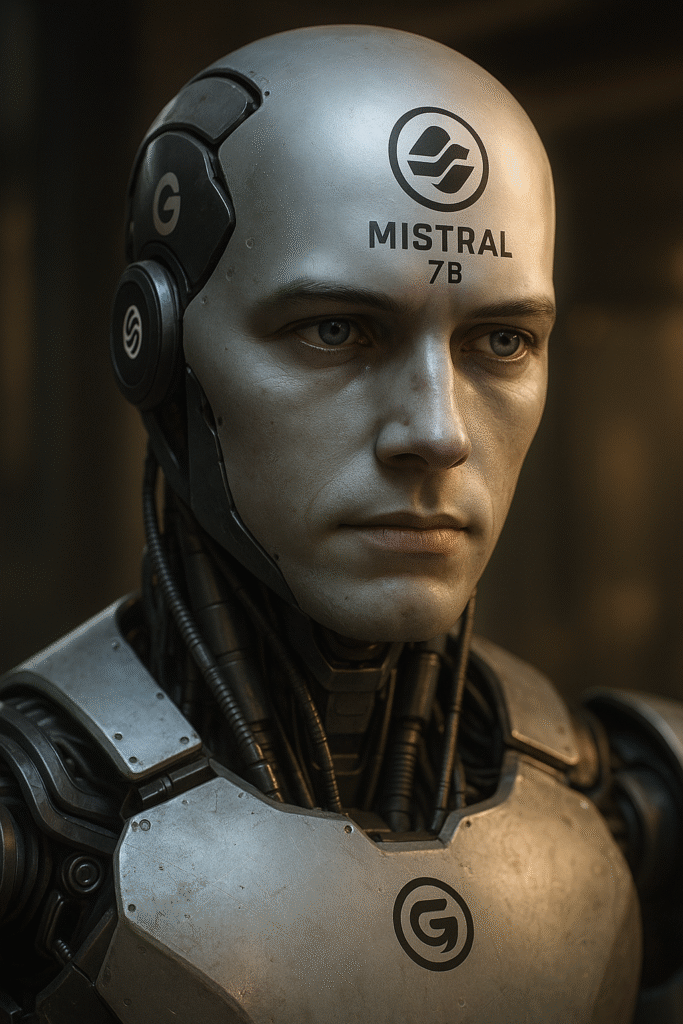
If there’s one model proving you don’t need billions in funding to compete, it’s Mistral 7B.
Developed in Europe, Mistral’s claim to fame isn’t its size — it’s its efficiency. With just 7 billion parameters, this open-source model performs nearly as well as GPT-4 in writing, coding, and translation tasks.
What makes Mistral feel smarter than ChatGPT is its adaptability. Because it’s open-source, developers are constantly improving it, making custom versions for healthcare, research, and even journalism. It’s lightweight enough to run on laptops — no massive GPU farm required.
Mistral’s rise signals a quiet rebellion against corporate control of AI. It’s the community’s answer to OpenAI — smaller, faster, and transparent.
For many experts, Mistral represents what the future of AI should be: accessible, ethical, and owned by the people.
4. xAI Grok — Elon Musk’s Unfiltered Mind
Leave it to Elon Musk to make things unpredictable. His startup xAI released Grok, an AI model that’s directly integrated with X (formerly Twitter).
Unlike ChatGPT, Grok isn’t polite — it’s honest. It speaks with personality, sarcasm, and bold opinions. It learns from the open web, giving it access to real-time events and social context — something GPT-4 can’t do.
Musk describes Grok as “a rebel with a cause.” It was designed to challenge mainstream narratives, even if that means being controversial.
What makes Grok potentially smarter than ChatGPT isn’t technical complexity — it’s awareness. It can read trends, scan discussions, and generate responses that reflect live global sentiment. In other words, it doesn’t just understand language — it understands the moment.
That makes it a favorite among creators, journalists, and analysts who crave unfiltered insight.
5. OpenAI Aardvark — The Autonomous Coder
And then there’s Aardvark — OpenAI’s most advanced GPT-5-era experiment. It’s not a chatbot; it’s an autonomous system designer.
Aardvark can read, fix, and optimize code — without being told to. It identifies logic flaws, writes unit tests, and updates documentation on its own.
This model marks the first real step toward self-repairing AI systems — machines that maintain themselves. Engineers describe it as the “AI that builds AI.”
That’s why many believe Aardvark isn’t just smarter than ChatGPT — it’s the start of something entirely new: autonomous intelligence.
(Reference: OpenAI Blog)
So, What Does “Smarter” Really Mean?
Each of these five models — Gemini Ultra 2, Claude 3, Mistral 7B, Grok, and Aardvark — represents a different philosophy of intelligence:
- Google focuses on logic and scale.
- Anthropic emphasizes ethics and empathy.
- Mistral stands for freedom and accessibility.
- xAI pushes raw expression and social awareness.
- OpenAI drives autonomy and creation.
Being “smarter than ChatGPT” isn’t about beating it on benchmarks — it’s about surpassing it in understanding humanity.
While ChatGPT was the spark that ignited mass adoption, these five models are the evolution — less chatbot, more co-pilot. They’re shaping an ecosystem where AI collaborates instead of just responds.
The Future Beyond ChatGPT
The next frontier isn’t bigger models; it’s smarter behavior.
Models that reason, challenge, and evolve will define 2025.
Yet, this growth brings tough questions:
- If AIs become self-improving, who’s responsible for their output?
- Can “autonomous intelligence” truly align with human ethics?
- And will humans still be in control once AI starts managing itself?
As companies race to create systems smarter than ChatGPT, we’ll also need stronger regulation, better education, and ethical frameworks to keep the balance between innovation and control.
(Reference: EU AI Portal)
Final Thoughts: The Year AI Learned to Think
2025 might be remembered as the year artificial intelligence finally matured.
For years, AI was a parrot — repeating what we fed it. But these new models are thinkers. They can reason, learn context, and even develop a sense of ethics or humor.
“Smarter Than ChatGPT” doesn’t just describe better tech — it defines a shift in how we see intelligence itself. The goal is no longer to mimic humans, but to augment them — to build systems that think differently but work with us.
As OpenAI Aardvark, Gemini, Claude, Mistral, and Grok rise, the competition won’t just be about who’s smartest. It’ll be about who’s most aligned with humanity’s needs.
In the end, that might be the real definition of intelligence — not processing power, but purpose.
Comments