

Semantic Scholar – Free AI Research Tool for Finding, Summarizing & Discovering Scientific Papers
About this Tool
What is Semantic Scholar?
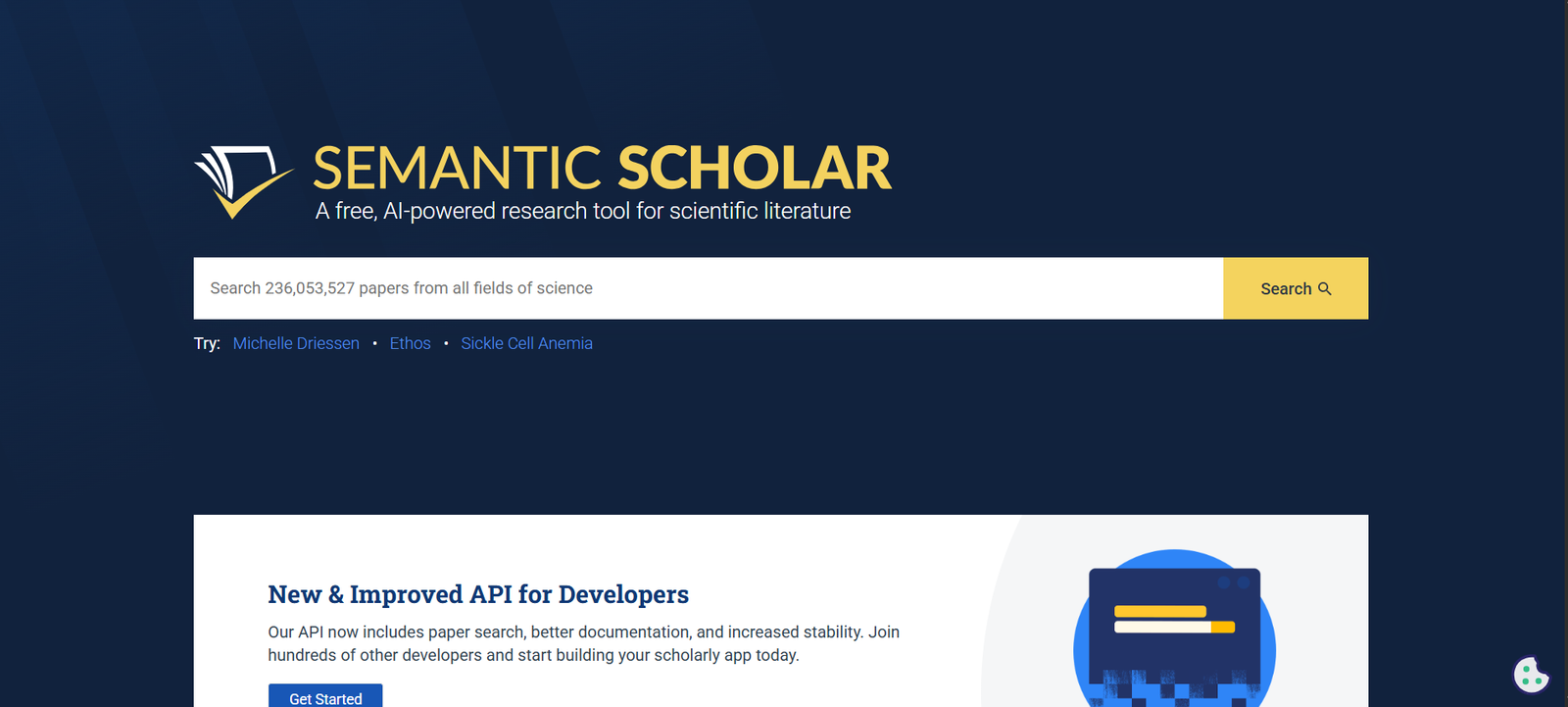
The Allen Institute for AI (Ai2) has created an artificial intelligence-powered academic search engine called Semantic Scholar that offers free search capabilities to anyone. Boosts research, student and expert productivity by leveraging AI to understand the research rather than just the keywords.
When you use a standard academic search engine, you’ll see a list of search results, with no indication that any of the papers are influential or a summary of the paper made by AI, no relevant research suggestions, or even no connections to other papers that’s shown to the user. But with Semantic Scholar, you can see influential papers, an AI-generated summary of the paper, relevant research suggestions, and connections between papers. It is the index of over 230 million research papers including those in medicine, engineering, computer science, biology, the social sciences, and other disciplines.
Today’s article will focus on the most important features of Semantic Scholar.
- Semantic Search for Literature Search: You can search for papers (not keywords) that are relevant to your research.
- Gain a quick understanding of papers using TLDR Summaries generated by reading AI.
- Analyze and explain research with a major impact – highly influential citations.
- Research Feeds: Receive personalized suggestions of papers based on your interests.
- BibTeX, APA, MLA, Chicago and other reference export formats are supported.
- Paper Library: Save and store research papers in custom folders, and share with other students and colleagues.
- Author Profiles: Author researcher profiles, publications, citation information.
- Research Tools: Academic Graph API for free for developers to use.
The detailed analysis of operation of Semantic Scholar.
With the help of AI, Semantic Scholar is able to better understand the meaning and relationships of content in research papers and not only by key word matching.
Typical workflow:
- Search with either keywords or research questions.
- Browse AI-ranked papers.
- For full papers, look at TLDR summaries first.
- Actually, add the essential research to your library.
- Share ideas, information, citations or find equivalent research suggestions.
This type of method gives the scientists the opportunity to reduce the amount of literature they must use.
Use Cases of Semantic Scholar:
📚 Academic Research
Find millions of peer-reviewed papers in different areas of study.
🎓 Student Learning
Gain insights into intricate research using AI-generated summaries.
📝 Literature Reviews
Identify influential papers, make useful references.
🔬 Scientific Discovery
Talk about other research and citation histories.
💻 Research Applications
Create academic search tools/analytics with a free API.
Pricing
The use of Semantic Scholar is free.
Users will be awarded access to:
- Unlimited paper search
- AI-powered summaries
- Research recommendations
- Citation exports
- Paper libraries
- Research feeds
In addition, developers can access the Semantic Scholar API, too, which is also more easily accessible with API keys.
This is a great tool to refresh information.This is a great tool to check out information.
The search feature with Artificial Intelligence is one of the most impressive features of Semantic Scholar. It will not just identify papers containing the keywords you use, but also those that cater closely related ideas and concepts, in order to facilitate finding relevant papers.
The benefit you’ll find is the fact that they’ve included TLDR summaries built-in. They provide the users with a quick summary of research papers, and assist them to decide whether to go through the paper or not.
Another benefit of Research Feeds is that they keep you up to date: They show you the latest papers of your favourite reading lists.
Why is Semantic Scholar so special?
Semantic Scholar combines:
- AI-powered search
- paper summaries
- citation analysis
- research recommendations
- academic libraries
All into a solitary free platform.
Key advantages include:
- More than 230 million indexed research papers.
- AI-generated TLDR summaries.
- The title of highly influential citation analysis was used for the title.
- Personalized research recommendations.
- Free and unlimited access to use by researchers, students and developers.
In contrast to the conventional academic search engines, Semantic Scholar aims to help users to grasp scientific research quicker instead of obtaining it.
Who can be beneficiaries of Semantic Scholar?
Semantic Scholar is ideal for:
- Students
- Researchers
- Professors
- Engineers
- Healthcare professionals
- Data scientists
- Any scholar interested in research on science and history.
When you do scientific research on a regular basis, it can make research search and comprehension much easier and efficient with Semantic Scholar.
Final Verdict
Semantic Scholar is among the foremost free AI research tools around nowadays. It features the ability to access relevant scientific literature easily and efficiently through semantic search, AI-generated summaries, recommendation and analysis of citations.
From tackling research papers to performing literature reviews and up to date research, Semantic Scholar is an AI-powered tool to explore scientific knowledge quickly, reliably and easily.
Tool support
- Website https://www.semanticscholar.org/
⚡ Alternative Tools
View More Tools
Humata AI ...


Scite AI –...

Elicit AI ...

Google Not...

List Your AI Tool and Reach Thousands of AI Enthusiasts
Showcase your AI product to a growing community of developers, creators, and tech-savvy users. Whether it's a productivity tool, image generator, chatbot, or automation tool — gain visibility, feedback, and users by featuring it on our platform.
Submit Your Tool