
OpenAI has published an AI-generated proof aimed at resolving the Navier-Stokes problem, one of the seven Millennium Prize Problems in mathematics. The problem has challenged mathematicians for around 90 years and asks a difficult question about how fluids behave.
According to OpenAI, its AI system produced a proof showing that certain three-dimensional fluid flows can develop a mathematical singularity in a finite amount of time. The company also created a formal version of the proof using Lean, a system designed to check mathematical proofs.
However, there is an important point to understand. Publishing a proof is not the same as receiving official recognition for solving the Millennium Prize Problem. The mathematical community still needs to examine the work carefully.
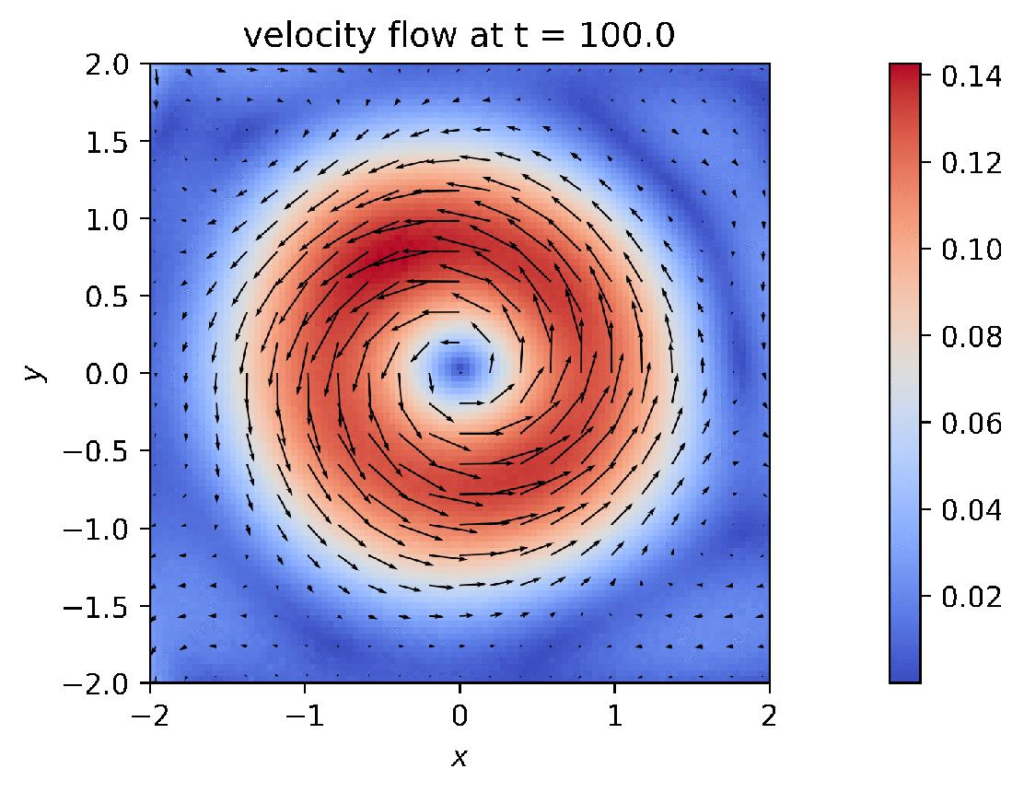
What Is the Navier-Stokes Problem?
The Navier-Stokes equations are used to describe how fluids move.
They can help describe things such as water flowing through a pipe, air moving around an aircraft, ocean currents and many other types of fluid movement.
The equations themselves are well known. The difficult part is understanding whether their solutions always behave properly in three dimensions.
Imagine starting with a smooth and predictable flow of water. The big mathematical question is whether that flow can eventually become so extreme that the equations produce a point where some value becomes unlimited.
In simple terms, mathematicians want to know whether a smooth fluid can suddenly develop an extreme point in a finite amount of time.
This question has remained open for decades.
The Clay Mathematics Institute included the Navier-Stokes problem among its seven Millennium Prize Problems. Each problem carries a $1 million prize for a solution that satisfies the required conditions.

What Did OpenAI’s AI Find?
OpenAI says its AI system produced an analytical proof showing that a certain type of three-dimensional fluid flow can develop a singularity in finite time.
A singularity is a point where a mathematical quantity becomes unbounded.
In this case, the proof describes a situation where the velocity of the fluid can become unbounded while the total energy of the system remains finite.
One way to imagine the idea is through a vortex.
Picture a swirling flow that becomes tighter and tighter. As the vortex shrinks, the movement around it becomes increasingly intense. The mathematical argument developed by the AI system describes how this process can eventually lead to the type of breakdown needed for the problem.
This is important because the behavior of these extreme fluid flows is at the heart of the Navier-Stokes problem.

Thousands of AI Agents Worked Together
Perhaps the most unusual part of OpenAI’s announcement is how the proof was created.
This was not simply a normal chatbot being asked to solve a difficult equation.
OpenAI says it used a large system of AI agents working together. These agents could explore different mathematical ideas, run code, use research tools and communicate with other agents.
According to the company, around 10,000 AI agents were involved in the wider effort.
The project began with OpenAI testing its AI system on difficult open problems in mathematics. Different groups of agents explored different approaches before useful ideas were combined into a final mathematical argument.
The process reportedly took several days.
This approach is very different from the way people normally think about AI assistants. Instead of one model producing one answer, OpenAI created a large research system where many agents could work on different parts of the same problem.

Lean Was Used to Check the Proof
Another important part of the project is Lean.
Lean is a computer system used for formal mathematics. It allows mathematical statements and proofs to be written in a form that a computer can check.
This matters because mathematical proofs can become extremely long and complicated. Even a small mistake in one step can affect the entire argument.
OpenAI says it created a formal Lean version of its Navier-Stokes proof.
The system was then used to check whether the formal proof followed correctly from its stated assumptions.
This provides an additional layer of verification.
However, Lean verification does not automatically mean that every question surrounding the result has been settled. Mathematicians still need to examine the proof, understand its reasoning and determine whether it fully addresses the original problem.

Has OpenAI Officially Solved the Problem?
This is where the story needs some caution.
OpenAI has published a proof claiming to resolve the problem, but that does not mean the $1 million Millennium Prize has already been awarded.
The Clay Mathematics Institute has its own process for evaluating solutions to its Millennium Prize Problems.
OpenAI has also said that it does not intend to claim the Millennium Prize for this result.
The distinction is important.
It is accurate to say:
OpenAI has published an AI-generated proof claiming to resolve the Navier-Stokes problem.
It would be too early to say:
OpenAI has officially won the Millennium Prize for solving Navier-Stokes.
The proof now needs to stand up to detailed mathematical examination.
Questions About Earlier Research
The announcement has also raised questions about earlier mathematical work connected to similar problems.
OpenAI discussed research involving mathematicians Tristan Buckmaster and Levent Alpöge and said it investigated whether earlier work could have influenced the AI system that produced its Navier-Stokes result.
OpenAI says its investigation found that certain earlier prompts could not have influenced the internal model used for the proof.
These questions are important because AI-generated research creates new challenges around credit, previous work and the role of training data.
However, these issues are separate from the central mathematical question.
The most important question remains whether the proof itself is correct and whether it completely satisfies the requirements of the Navier-Stokes problem.
Why This Matters for AI
The bigger story is not just about one mathematical problem.
It is about what AI systems may be able to do in scientific research.
Until recently, AI was mainly used for tasks such as answering questions, writing text, generating code and analyzing information.
Mathematical research is different.
A difficult mathematical problem may require discovering a completely new idea, testing that idea and then proving that it works.
OpenAI’s experiment suggests that large groups of AI agents could potentially help with this process.
Instead of asking one AI system to solve a problem, researchers could use thousands of agents to explore different possibilities at the same time.
Some agents could search for ideas. Others could test those ideas. Others could look for mistakes. Another system could then turn the final argument into a formal proof.
This could become an interesting direction for future scientific research.
But AI Has Not Replaced Mathematicians
It would be a mistake to look at this announcement and conclude that AI can now solve every major mathematical problem.
The system required a large amount of computing power and a carefully designed research setup.
More importantly, the final result still needs human examination.
Mathematicians need to understand the proof and check whether every part of the argument works.
This is especially important for a problem as significant as Navier-Stokes.
AI can generate ideas and mathematical arguments, but the scientific community still needs to determine whether those arguments are correct.
What Happens Next?
The next stage is verification.
Researchers will examine the proof, test its reasoning and compare it with the exact requirements of the Millennium Prize problem.
The formal Lean version gives researchers another way to examine the mathematical argument, but independent review remains important.
If the proof survives detailed examination, the result could become a major milestone in both mathematics and artificial intelligence.
It could also encourage researchers to use AI systems for other difficult mathematical and scientific questions.
The Bigger Picture
OpenAI’s Navier-Stokes announcement represents an unusual moment in AI research.
A problem that has challenged mathematicians for roughly 90 years has now been targeted by a large network of AI agents working together.
The system has produced a mathematical proof and a formal version designed for computer verification.
But the story is not finished yet.
The proof now has to face the same test as any other serious mathematical result: careful examination.
If it holds up, it could show that AI is capable of contributing not only to existing knowledge, but also to the search for new mathematical ideas.
For now, the most accurate description is simple:
OpenAI has published an AI-generated proof claiming to resolve the 90-year-old Navier-Stokes problem. The mathematical community now has to determine whether the proof truly solves it.
Comments