
OCR has been around for a long time. It is the technology that lets a computer look at a scanned document or image and turn the text inside it into digital text.
For a simple page, this is not a big problem anymore. But things become much harder when the document has many pages.
A long PDF can contain tables, images, formulas, headings, footnotes and paragraphs that continue from one page to another. When an OCR system processes every page separately, some of that information can easily get mixed up.
Baidu is trying to solve this problem with a new open-source model called Unlimited-OCR.
The model is built for long documents and is designed to process many pages together instead of treating every page as a completely separate task. Baidu describes it as a system for “one-shot long-horizon parsing,” which basically means it can work with a large document in one go.
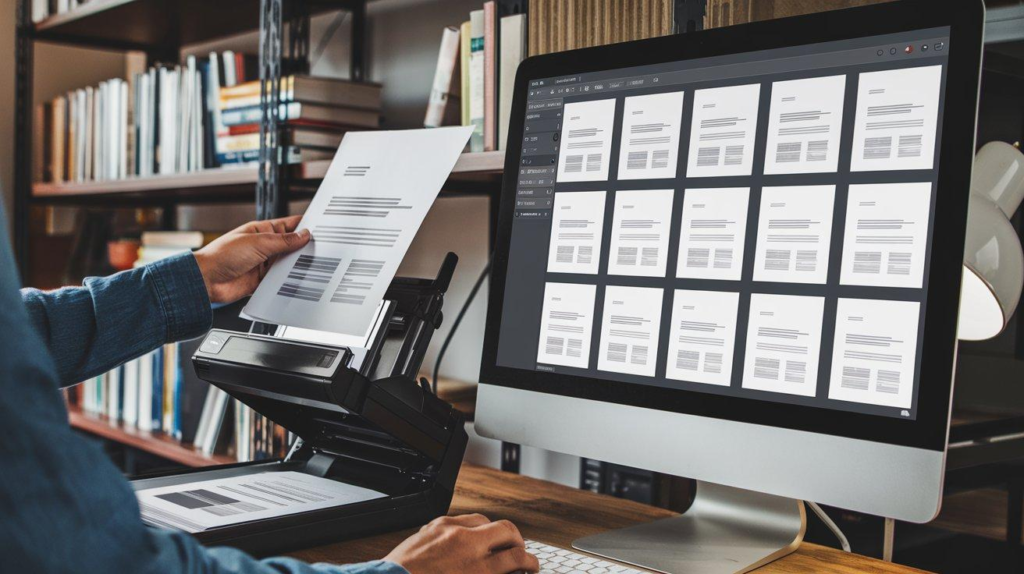
What is Unlimited-OCR?
Unlimited-OCR is a 3-billion-parameter AI model from Baidu that focuses on document OCR.
The goal is quite simple: make it easier for AI to read long documents while keeping the structure of those documents intact.
Normal OCR mainly answers one question:
What text is present in this image?
But that is not always enough.
Imagine a 30-page business report. It may have a title, several sections, tables and numbers. A useful OCR system should not just copy every word. It should also try to understand how those pieces are arranged.
For example, a table might start near the bottom of one page and continue on the next page. A heading might appear at the end of one page while its paragraph starts on the next one.
If the software processes those pages independently, the connection between them can be lost.
Unlimited-OCR is designed to work with the document as a larger piece instead.
Baidu has made the model available through its official model page, where developers can download it and run it with supported tools.
Model: Baidu Unlimited-OCR on Hugging Face
Why long documents are difficult for OCR
Reading one page is easy compared with reading an entire document.
Take a normal PDF with 40 pages. A traditional workflow may first turn each page into an image and then run OCR on each image.
That works, but the system may not know that page 15 and page 16 are part of the same section.
This becomes a bigger problem with tables.
A table can contain dozens of rows, and sometimes it continues across multiple pages. If each page is handled separately, the final result may not look like the original table.
The same thing can happen with reading order.
A document might have two columns. The text could be read from the left column first and then the right column. But an OCR system may sometimes mix the order.
There are also formulas, lists, captions and footnotes.
So extracting text is only part of the job.
The bigger challenge is keeping the document useful after it has been converted into digital text.
That is where Baidu’s approach becomes interesting.
One model for a much longer document
Unlimited-OCR is designed to process long documents in one pass.
Baidu says the model supports a maximum length of 32K and is designed for long-horizon document parsing. The model page also shows support for multilingual OCR and structured document processing.
In simple terms, this gives the model much more room to work with a large document.
Instead of thinking only about one page, it can keep more of the document in context.
That can help when information on one page depends on information from an earlier page.
For example, imagine a report where page 5 introduces a table and page 6 contains the rest of that table.
A system that understands the wider document has a better chance of keeping that information together.
This is one of the main ideas behind Unlimited-OCR.
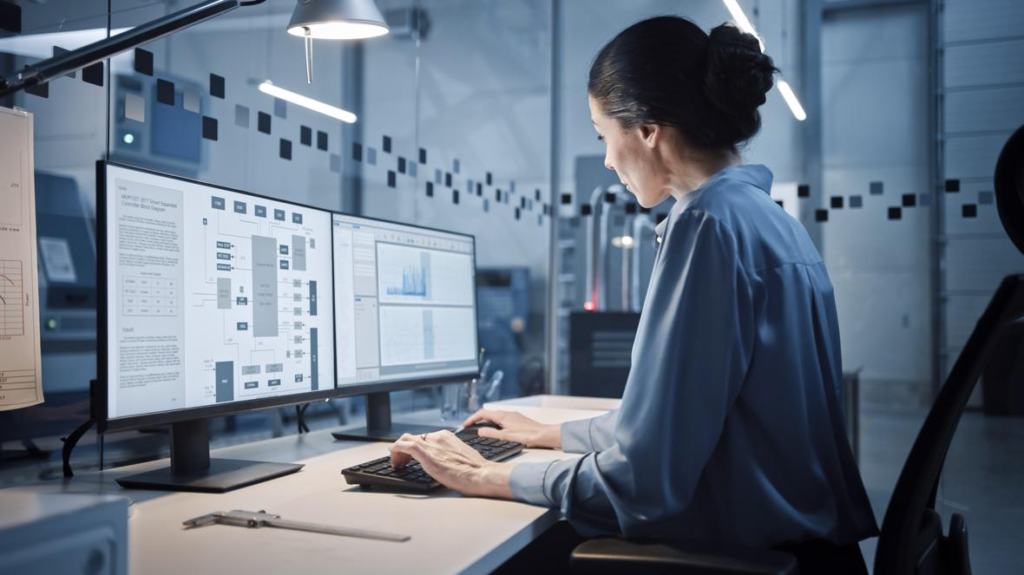
It does more than just read text
Another interesting part of Unlimited-OCR is that it is not focused only on plain text.
The model is designed to deal with different parts of a document, including tables, formulas and reading order. Its model information also shows support for multilingual document processing.
This matters because real-world documents are rarely just paragraphs.
A financial report might contain tables full of numbers.
A research paper might contain formulas.
An invoice might have a product table, prices and totals.
A legal document might have headings, numbered sections and footnotes.
A good OCR system needs to handle all of these things.
If the final result is just a large block of text, a lot of useful information is lost.
Unlimited-OCR tries to keep more of the original structure.
The output can be easier to work with
One useful part of the model is its ability to produce structured output.
For developers, this is important.
OCR is often not the final step.
A company may want to take a scanned document, convert it into text and then send that text to another AI model.
For example, a simple workflow could look like this:
PDF – OCR – Structured text – AI analysis
Once the document has been converted into clean text, another system can search it, summarize it or answer questions about it.
Markdown output can also make the result easier to read and process.
Instead of manually copying information from every page, a developer can build a system that does the work automatically.
What makes the model interesting for local AI
One of the biggest reasons developers may want to experiment with Unlimited-OCR is that it is open source.
The model is available on Hugging Face, and the official model page includes instructions for running it with Transformers and vLLM.
That means developers do not have to depend only on a website where they upload their documents.
They can experiment with running the model in their own environment.
This could be useful when documents contain private information.
Think about company contracts, invoices, internal reports or personal documents.
Some users may not want to upload that information to an outside service.
Running an OCR model locally gives developers another option.
Of course, local AI still needs suitable hardware. A 3-billion-parameter model is much smaller than some of today’s huge AI models, but running it smoothly can still require a capable GPU or other suitable setup.
So “open source” does not automatically mean “runs perfectly on every laptop.”
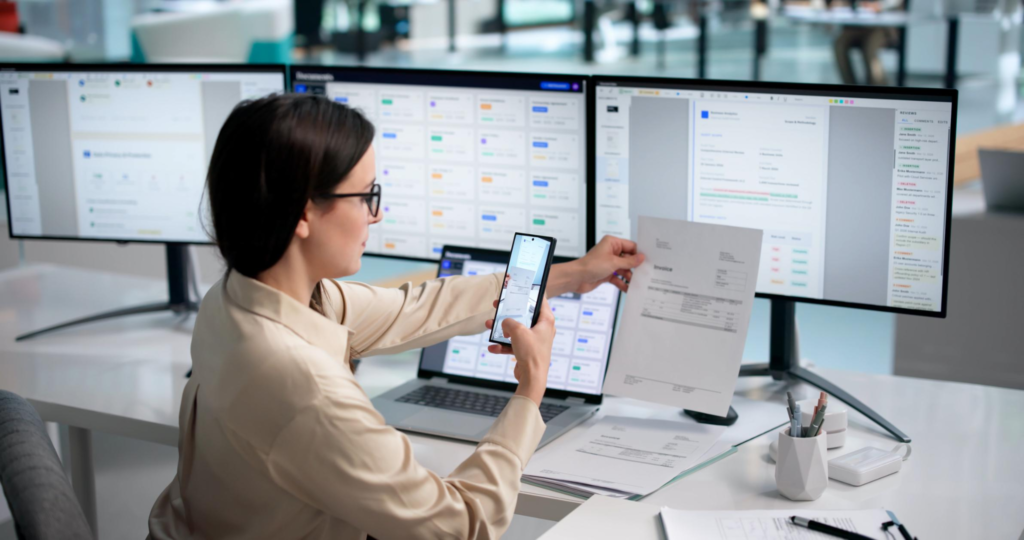
Why 3 billion parameters is interesting
The model has around 3 billion parameters.
That number is worth mentioning because modern AI models can be much larger.
There are models with tens or even hundreds of billions of parameters, so a 3B model is relatively small compared with some of them.
The advantage of a smaller model is that it can be easier to deploy.
That does not mean it will always be faster or better in every situation.
OCR is a very specific task, and a smaller model trained for document understanding can sometimes be more useful for that job than a much larger general-purpose model.
Unlimited-OCR is a good example of this idea.
It is not trying to become another general chatbot.
It has a much narrower job.
Read documents and keep their structure.
That focus could make it useful for developers building document tools.
Where could Unlimited-OCR be used?
There are quite a few possible uses.
One obvious example is old documents.
A company may have thousands of scanned PDFs sitting in storage. Searching those files manually can be painful.
With OCR, those documents can be converted into searchable text.
Another example is invoices.
A business could use OCR to read invoices and pull out information such as company names, dates, product details and prices.
There are also legal documents.
Law firms deal with large amounts of paperwork, and being able to turn scanned documents into searchable text can save a lot of time.
Then there are books and research papers.
Students and researchers often have PDFs that are difficult to search because the text is stored as images.
A long-document OCR model could make those files easier to work with.
There is also a growing use case around AI assistants.
Imagine having a local AI assistant that can read a large collection of PDFs.
The OCR model could first convert the documents into structured text. Another AI system could then search through that information and answer questions.
That could turn a normal folder full of PDFs into something much more useful.
But it is not perfect
It is important not to look at Unlimited-OCR as a magic solution.
OCR still has problems.
Documents can have strange fonts, poor scans, damaged pages or unusual layouts.
Handwritten text can also be difficult.
A document with a very complicated design may not come out exactly like the original.
Long documents also create their own problems.
Even if a model can process many pages together, there is still a limit to how much information it can handle and how much hardware is available.
So users should still test the model with their own documents before depending on it for important work.
That is especially true for things like financial documents, legal paperwork or other files where a small OCR mistake could cause a problem.
Why this release matters
The interesting part about Unlimited-OCR is not simply that Baidu released another OCR model.
The bigger idea is that document AI is moving beyond basic text recognition.
A document is more than a collection of words.
It has structure.
It has headings.
It has tables.
It has page relationships.
It has reading order.
It has formulas and other visual information.
When an AI model can keep those things together, the extracted document becomes much more useful.
This is especially important as more people start building AI tools around PDFs and other documents.
Instead of manually reading every page first, users can let an OCR model handle the first step.
The AI can then work with the extracted information.
The future of document OCR
OCR has changed quite a lot over the years.
Earlier systems were mostly about recognizing characters from images.
Today, AI models can do much more.
They can understand layouts, identify tables and work with much larger documents.
Unlimited-OCR is another step in that direction.
Its focus on long documents is what makes it stand out.
Instead of asking the model to read one page and then starting again, the idea is to give it a much larger view of the document.
That can be useful for everything from business reports to research papers.
And because Baidu has released the model openly, developers can experiment with it and build their own tools around it.
Final thoughts
Baidu’s Unlimited-OCR is an interesting example of where document AI is heading.
The biggest problem with long documents is not simply reading the words.
It is understanding how those words fit together.
Tables can continue across pages. Sections can span multiple pages. Reading order can become confusing. Important information can be separated by page breaks.
Unlimited-OCR is designed to deal with that problem by processing long documents as a larger task.
The 3B parameter model, 32K maximum length and focus on structured document output make it an interesting option for developers working with PDFs and scanned documents.
It will not replace every OCR tool, and it will not make every document perfect.
But the direction is clear.
The future of OCR is not just about asking an AI to read a page.
It is about asking it to understand the whole document.
Comments